Ewes tupped in the summer and early autumn were grazing drought-stricken pastures that could result in reduced body condition which threatens the health of unborn lambs. However, the knock-on effect in late pregnancy can be mediated by testing forage and managing ewe nutrition requirements by using blocks or buckets ahead of lambing.
In the six weeks leading up to lambing, 75 percent of foetal growth takes place, significantly increasing metabolisable energy (ME) and protein requirements for ewes.
Our nutritionist Dr Alison Bond suggests that sheep farmers must ensure these increased nutritional demands are being met to protect the long-term performance of their flock.
“Not only are ewes partitioning energy towards rapid foetal growth in a very condensed period, but they are also starting to produce colostrum while maintaining their body condition,” she says
If these increased protein and ME requirements are not met and ewes are left malnourished, lamb birthweights will be reduced, which will go on to impact growth rates. Lambs will also be at greater risk of hypothermia and can even suffer from fertility issues later in life due to the impact on foetal ovary and testes development. Ewe performance can also be harmed, with an increased risk of pregnancy toxaemia and delayed onset of lactation.
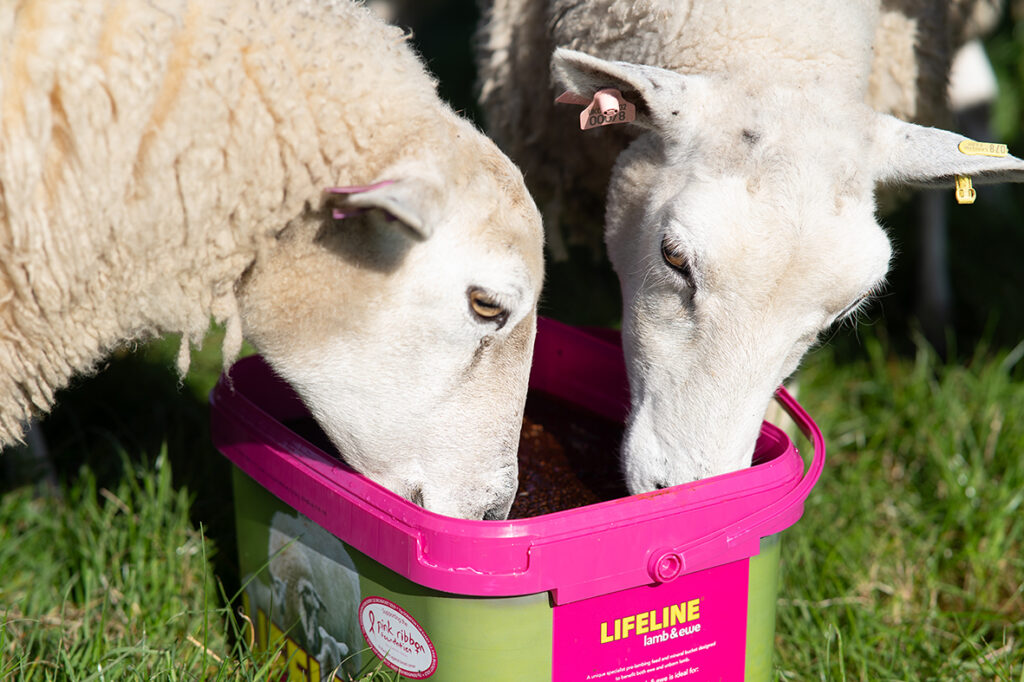
Alison suggests that farmers should have forage analysed to determine what level of supplementation will be required. She recommends supplementation with a free-access high energy and quality protein block or bucket, such as LIFELINE Lamb & Ewe to reduce competition between ewes, support forage utilisation and maintain body condition on the approach to lambing.
Balanced with vitamin E and essential trace elements like selenium, iodine and cobalt, LIFELINE Lamb and Ewe also contains a specifically selected blend of functional nutrients that work together to support the ewe’s immune function and colostrum quality.
“Feeding a well-balanced, energy and quality protein bucket such as LIFELINE Lamb & Ewe, including minerals, vitamins and trace elements during this rapid period of foetal development can significantly increase immunoglobulin levels in the colostrum,” explains Alison.
Along with providing energy to the newborn lamb, colostrum also provides immunoglobulins or antigens that supports passive immunity to disease in young lambs. Colostrum immunoglobulin levels are therefore an important measure of colostrum quality. In independent trial work by SAC, feeding an innovatively-balanced energy plus protein lick, including minerals, vitamins, trace elements and functional nutrients pre-lambing, was found to increase colostrum immunoglobulin content by 25% more than a standard energy bucket.
“Supplementing with a high energy and DUP block or bucket supplement is an effective way to provide pre-lambing ewes and lambs with the right nutrition for long-term flock performance,” concludes Alison.