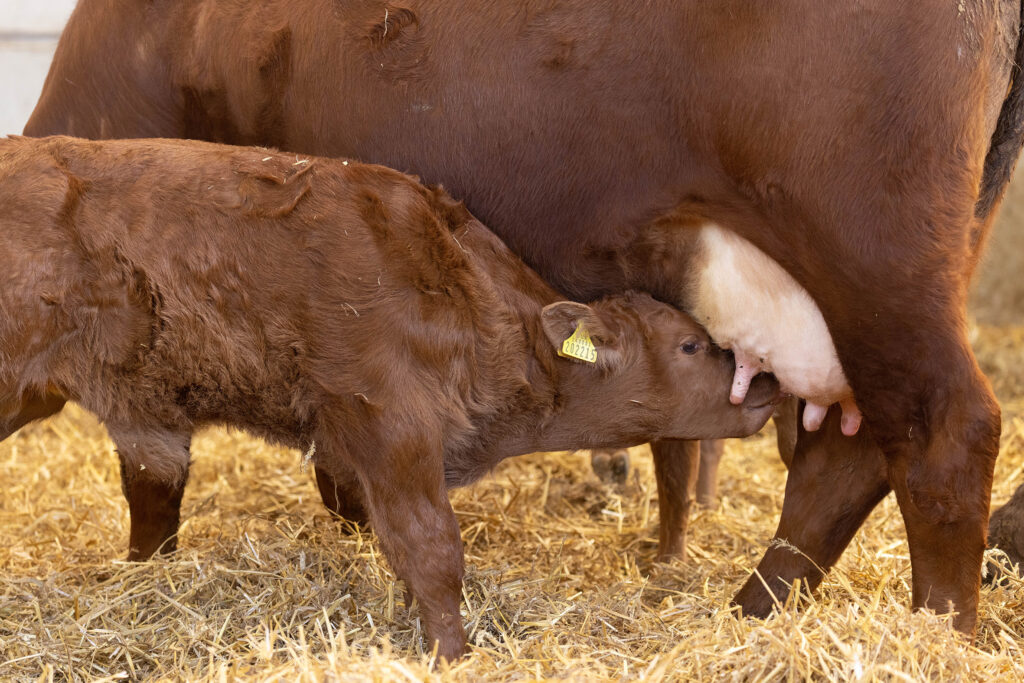
Continuing buoyancy in global beef markets should encourage spring calving suckled calf producers to double down on pre-calving nutrition.
This is the advice of Rumenco’s Technical Services Manager Dr Alison Bond, who says correct supplementation should always be a cost-effective investment, but with store and finished cattle prices forecast to remain strong, farmers should be in a ‘best practice’ mindset.
“The six to eight weeks leading up to calving is one of the most critical parts of the process of producing strong, healthy cattle for sale,” she says, “so providing a proven, well-formulated and balanced source of nutrition at this point should be a priority.
“This is the time when you are seeking a seamless transition from pregnancy to lactation, which will avoid problems such as difficult calvings or milk fever, for example. It is also crucial to the supply of the best quality colostrum to the newborn calf, ensuring protection during the period of vulnerability and priming the immune system to guard against challenges such as scour and respiratory disease.
“Whether cattle remain housed or are outside on pasture, feed blocks and buckets offer a low-labour solution that ensures all cows receive the supplementation they require.”
Dr Bond points to Rumenco’s specialist pre-calving supplement LIFELINE Pre-Calver, which offers a balanced supply of vitamins, minerals, trace elements and a number of unique nutritional additives to support cow and calf health.
“Best practice, at this time, is ensuring that cows have everything they need, and that is exactly what LIFELINE Pre-Calver’s unique formulation has been developed to do,” she says. “It has been proven in trials to increase colostrum quality by up to 20%, which could be the difference between a thriving calf and one that is susceptible to disease. There is also a low calcium and high magnesium balance to help mitigate against milk fever, and to minimise the risk of difficult calvings.”
Coming out of a winter in which many suckler producers have faced challenges regarding the quantity and quality of forage, Dr Bond says the risks of mineral and trace element deficiencies could be greater than usual.
“It’s another reason for a best practice approach at this time,” she stresses. “Feeding LIFELINE Pre-Calver will provide a blend of important nutritional boosters along with multiple sources of copper, including protected copper, to support fertility post-calving. There are also high levels of selenium and vitamin E to promote calf vigour and maintain cow health throughout the transition period.
“With a global shortage of protein, and the UK beef herd contracting by over 4% in the last year according to Defra data, producers can be confident that demand will continue to support strong market prices,” Dr Bond concludes. “This should provide confidence and encourage a best practice approach, and a focus on key areas like pre-calving nutrition should be every producer’s priority.”